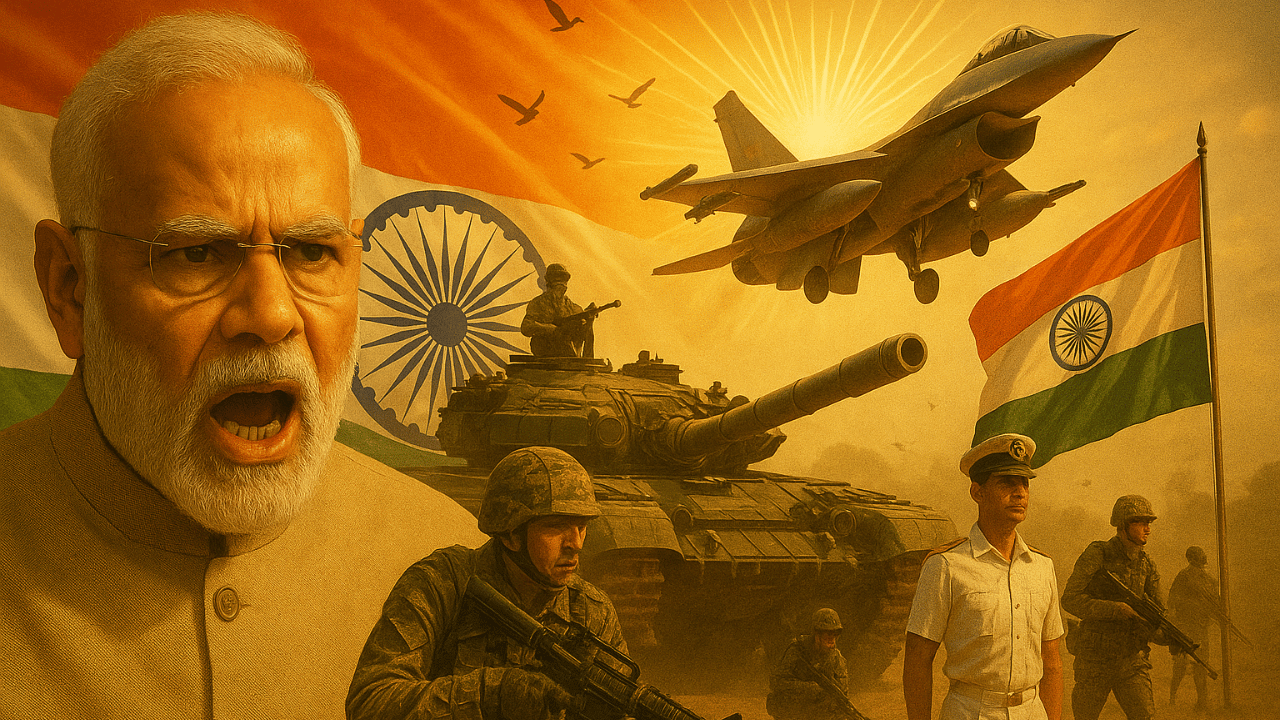
Recently, the unfortunate terrorist attack at Pahalgam has triggered concerns across the nation, leading many to wonder: "Will this affect the Indian stock market?"
Let's break it down calmly and logically — because history teaches us a lot.
Historical Perspective: India and Past Conflicts
Looking at previous instances where India faced similar tensions, especially with Pakistan, the pattern is clear and reassuring:
-Kargil War (May 1999 - July 1999): Despite the intense military operations, the Indian stock market remained largely stable.
-Uri Surgical Strike (September 2016): The market saw a very slight dip but recovered quickly, showing strong resilience.
-Pulwama Attack and Balakot Airstrikes (February-March 2019): Again, while there was a minor correction, markets bounced back without any long-term damage.
In each case, the immediate reaction was mild, and investors who stayed patient were rewarded.
The key point to remember is: these were regional conflicts. They did not involve global superpowers or disrupt global trade, which means the impact on markets was temporary and contained.
Why This Time Will Be No Different
1. Regional Conflict, Not a Global Event
Unlike the Russia-Ukraine war, which affected oil prices, global supply chains, and investor sentiment worldwide, the Pahalgam incident is a localized issue.
It is unlikely to derail the strong fundamentals of India's economy or significantly sway global market sentiment.
2. Results Season is Underway
Another big reason not to panic: it's results season!
Major companies are announcing their annual results. Strong earnings can overshadow any temporary geopolitical concerns.
Historically, earnings performance has had a much bigger impact on stock prices than temporary news flows.
3. Past Data is Reassuring
As per the historical study shared:
-The average correction during conflicts globally is around 7%.
-The median correction is even smaller at 3%.
-For India specifically, during conflicts with Pakistan, the correction has rarely exceeded 2%, except during the 2001 Parliament attack — and even that was more due to a global market meltdown (-30% S&P 500 crash) rather than the attack itself.
Even if there is a reaction this time, based on past patterns, it is likely to be within 5–10% — very manageable for long-term investors.
What's Happening in Pakistan?
An interesting twist:
Reports suggest that Pakistan’s main stock exchange portal went down following the Pahalgam attack tensions. Some speculate it was a deliberate move to prevent panic selling.
Ironically, this highlights the stark contrast — while India’s market infrastructure is strong, transparent, and resilient, Pakistan’s markets are far more vulnerable to shocks and rumors.
In fact, it feels like investors in Pakistan might also secretly wish they could invest in Indian markets for more safety and stability!
Once again, India shines as a pillar of strength.
Final Thoughts: No Need to Worry!
In conclusion:
-Stay calm. This is not the first time India has faced such challenges, and it won’t be the last.
-Market fundamentals are strong, and India’s economy is on a solid growth path.
-Focus on company earnings and long-term growth stories rather than short-term news events.
If you are a long-term investor, such events are mere noise in the larger journey of wealth creation.
Stay invested, stay positive, and Jai Hind!